

Floridaseeds
Colorado Blue Columbine 100 Seeds Aquilegia caerulea
Colorado Blue Columbine 100 Seeds Aquilegia caerulea
Couldn't load pickup availability
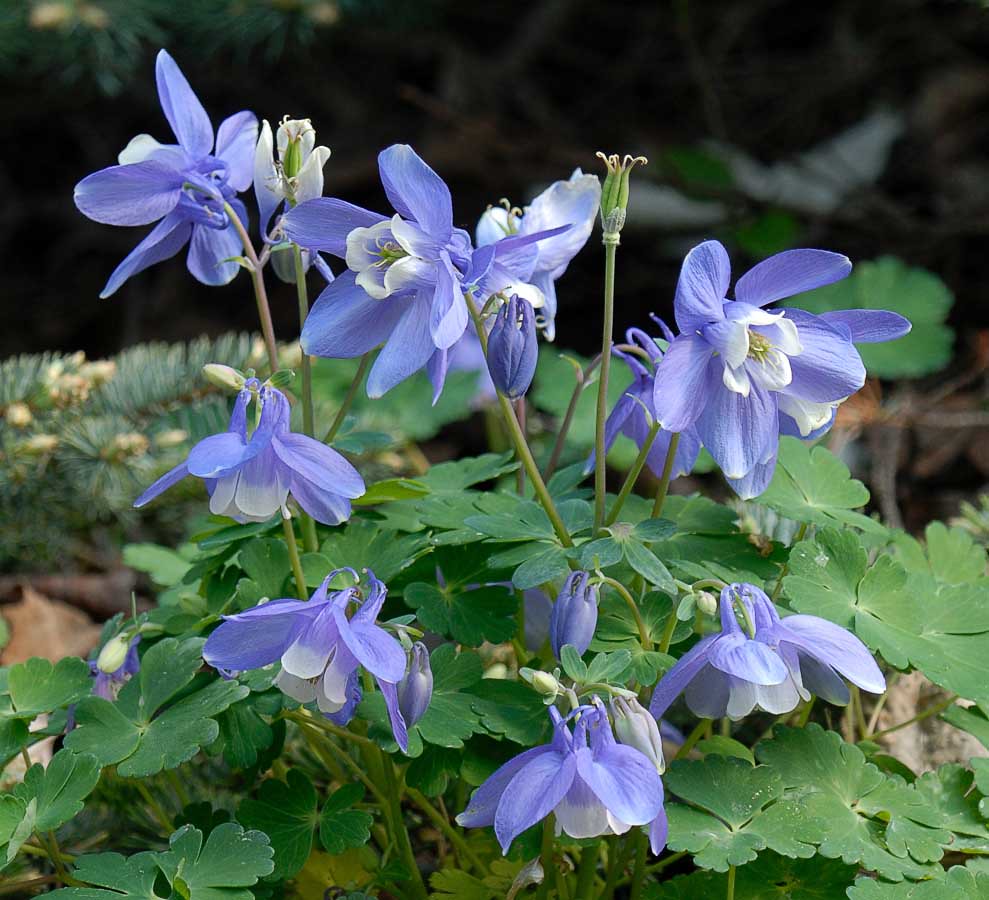
Aquilegia caerulea, commonly known as the Colorado blue columbine, is a perennial wildflower native to the Rocky Mountains of the western United States, particularly abundant in Colorado where it is the official state flower. This species is celebrated for its distinctive, nodding blossoms that feature long, graceful spurs and a striking color combination of pale blue to violet outer petals contrasted with white inner petals and bright yellow stamens, creating a delicate yet eye-catching display. Blooming from late spring to early summer, Aquilegia caerulea thrives in meadows, open woodlands, and along mountain slopes, often flourishing at elevations ranging from 6,000 to 12,000 feet. The plant typically grows between 1 and 3 feet tall, with finely divided, fern-like foliage that adds an airy texture to its appearance even when not in bloom. Highly attractive to pollinators such as hummingbirds, butterflies, and bees, the long nectar-filled spurs of its flowers are specially adapted to encourage visits from these species, making it an ecologically important plant in its native range. Gardeners prize Aquilegia caerulea for its adaptability, drought tolerance once established, and its ability to naturalize in a variety of conditions, though it prefers well-drained soil and partial shade. With its elegant form, historical significance, and ecological value, the Colorado blue columbine continues to be admired both in the wild and in cultivated landscapes, symbolizing the beauty and resilience of alpine and montane environments.
Growing Instructions
1. Prepare a mixture of half potting soil and half sand, perlite or vermiculite. Water the mixture so that it is moist but not wet. 2. Put the seeds on the soil. 3. Cover the seeds with a thin layer of soil. 4. Water the seeds. 5. Place the pots in an area with warm temperatures in full sun or part shade. 6. When the seedlings are a few inches tall, they can be transplanted.
Materials
Materials
Shipping & Returns
Shipping & Returns
Dimensions
Dimensions
Care Instructions
Care Instructions
Share